
The Startup Guide to Ecommerce Automation Bots that Handle Chats 24/7
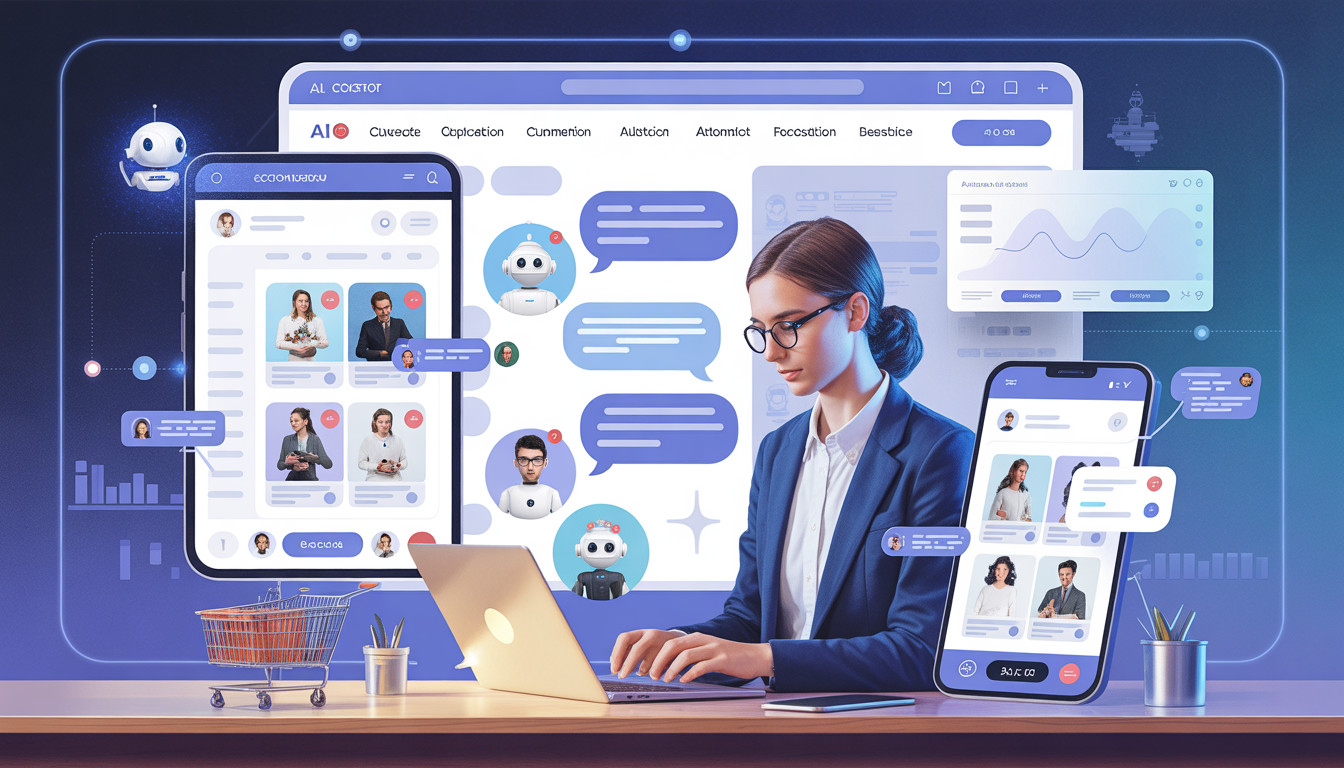
You have a global market. You do not have a global workforce. That is the reality for most e-commerce startups.
Wake up. Check the queue. Messages from customers who shopped while you slept. Standard questions. Where is my package? Can I change my size? Do you ship to this postal code?
Those questions sit for six hours, and you lose the sale. Response time correlates directly with conversion rates. That is a proven metric, and a customer waiting for a simple answer rarely comes back. They moved to a competitor who had the answer posted. Or they find a competitor who actually replied while they were still shopping.
In scenarios like these, ecommerce automation becomes your first choice. You do not need a massive support team working night shifts. You need software that executes logic. The goal is simple: resolve the inquiry the second it hits the system. Let us look at how you build that machine.
The High-Volume Inquiry Problem
Run a small operation. Support tickets seem manageable. Until they are not.
Maybe you handle twenty emails a day easily. Then a marketing post goes viral. Or a shipping carrier delays an entire region. The volume spikes. Your inbox becomes a liability.
Manual support scales linearly. To handle double the tickets, you need double the people. The math falls apart when you are burning cash every month. You need a technical solution.
The real damage is not just the time spent typing replies. It is the opportunity cost. Customer on your site. 2 AM. Looking at a product. They have a question, maybe about the return policy, or are ready to buy. If customers have to email and wait, that intent cools off. By morning, they bought from Amazon instead.
You need a mechanism that captures that intent instantly. That mechanism is a chatbot powered by ecommerce automation.
The Mechanics of E-commerce Chat Bots
Easy to think of a bot as a simple pop-up that says "Hello." Not accurate. It is a logic engine. You will encounter two distinct architectures.
First is the rules-based bot.
You program it with "if/then" statements. User types "track order"? The bot shows a button that links to the tracking portal. User types "return"? Bot pastes the return policy text. Useful for handling the absolute basics. Requires the customer to speak the bot's language. Clicking the exact buttons you provide.
Second is the intent-driven bot.
Uses Natural Language Processing. Does not just look for keywords. Tries to parse the meaning of a sentence. Customer types, "My package was supposed to be here yesterday." Rules-based bot gets confused. The intent-driven bot reads that as a "delayed shipping" issue. It queries the logistics API to see where the truck is.
The mechanics rely on APIs. The bot is a middleman. Takes a human question. Translates it to a data request. Pulls the data from your backend. Translates it back to plain English for the customer.
Critical Integration Points for Automation
You cannot run a bot in a silo. Can the chat tool not talk to your inventory system? It is just a pretty front end with no brain. When you set up your ecommerce automation stack, you must ensure the bot sits on top of your core data sources.
The first thing it needs is access to your Inventory Management System. Allows it to answer stock questions in real-time. Customer asks if a red sweater is available in medium. The bot checks the warehouse count. Replies with a factual "yes" or "no." Prevents the situation where a bot promises an item that is actually out of stock.
Second, it needs a view of your CRM data. Returning customer types, "I need help with my last order." The bot should know who they are. Pulls up their order history without asking for an order number. Reduces friction.
Third, and most critical for the "24/7" promise, is the link to Logistics Providers.
The number one question is "Where is my stuff?" Bot pulls tracking data directly from FedEx, UPS, or the local postal service via API. Resolves 40% of your tickets instantly.
The bot grabs the JSON data. Parses the latest scan event. Tells the customer the package is "Out for Delivery."
Comparison of Automation Capabilities
To decide what you actually need to spend money on, look at the table below. It breaks down the operational reality of each type of bot.
| Feature | Basic Rules-Based Bot | Advanced NLP Bot |
| Response Type | Static buttons and menus | Natural language dialogue |
| Complexity | Simple FAQ handling | Complex problem solving |
| API Integration | Limited to basic links | Deep CRM and ERP access |
| Setup Time | 1 to 3 days | 2 to 4 weeks |
| Maintenance | Low (Static updates) | High (Continuous training) |
A startup in week one might need the basic bot just to stop the bleeding. A scaling company processing hundreds of orders a day needs an advanced bot to protect margins.
Deployment Roadmap: From Zero to 24/7
You cannot just flip a switch and have perfect automation. You have to build the logic first. Here is the technical plan.
Start by auditing the last 500 tickets.
Export your support history. Read them. Categorize them. You will likely find that 80% of the questions fall into five categories. Order Status. Returns. Product Fit. Shipping Costs. Technical Issues. These categories become the pillars of your bot's knowledge base.
Then map the logic flows.
Take paper. Draw a box for the first question. Customer asks about "Order Status"? What happens next? The bot needs to ask for the order number. Customer types it. The bot validates it against the database. Is the number valid? Show the tracking link. Is the number invalid? Apologize. Ask them to check the number. You are essentially coding in a visual language before you touch the software.
Set the fail-safe.
You must define the hand-off protocol. Bot stuck in a loop? Worse than no bot at all. Decide on the trigger for human intervention. After three failed attempts to understand? When does the customer type "speak to agent"? Uses aggressive language? The bot needs a specific web hook that creates a high-priority task in your help desk queue. Or pages someone.
Beta testing.
Never launch a bot on your live site without testing. Run it on a staging site. Throw every possible question at it. Check the API latency. The bot takes four seconds to call the inventory API and respond. The customer will leave. Speed is part of the resolution.
Frequently Asked Questions
Q1. Can a bot handle refunds automatically?
A: Yes. A bot integrated with your payment gateway can initiate a refund. It checks the order date against your return policy window. It confirms the item condition rules. If the criteria pass, it processes the payment reversal through the API. Customer gets a confirmation message. No human touched it.
Q2. What happens if the bot cannot understand a customer?
A: System triggers a fallback protocol. This is a hard-coded rule. It immediately transfers the chat session to a live agent if one is available. If no agent is online, it creates a high-priority ticket in your help desk. The customer receives an email confirmation that a human will reply within your stated hours.
Q3. Does chat automation work on mobile devices?
A: Yes. Automation is platform-agnostic. It runs in the mobile browser. It runs inside native apps if you use a software development kit. The only requirement is that the chat widget code is optimized for responsive design. Slow loading on mobile is a deal breaker. You test for that.
Q4. How much does it cost to set up 24/7 chat automation?
A: Costs vary by volume. Basic SaaS bots run on monthly subscriptions. Maybe fifty to a few hundred dollars. Enterprise setups with custom API development require a larger initial investment. You pay for the dev time to map your specific logic flows and integrate legacy systems. Ongoing maintenance fees also apply for continuous training.
Q5. Will bots slow down my website's loading speed?
A: Most modern bots load asynchronously. That means the chat script fires after the main page content loads. It does not block the rendering of your product images or text. As long as your developer implements the sync tag correctly, your site speed and search engine rankings remain unaffected.
Measuring Success Through Data
Bot is live. You need to know if it is working. Vanity metrics like "Number of Chats Started" are useless. You need operational metrics.
The primary metric is Ticket Deflection Rate. Measures the percentage of inquiries the bot resolved completely without ever involving a human. The bot handles 100 conversations. Only 10 get handed off. Your deflection rate is 90%. That is a massive labor cost saving.
The second metric is Average Resolution Time. Total time from the customer's first message to the moment the bot confirms the issue is solved. You want this under sixty seconds for simple requests.
You also need to watch the Fallback Rate. Percentage of conversations where the bot had no idea what to do. Just gave up. Fallback rate high? Your logic flows are too shallow. Go back to the audit stage. Train the NLP model on the phrases it missed before.
Ecommerce automation is about filtering the noise. The bot handles the boring, repetitive, logistical questions. The human team handles the edge cases, the angry customers, and the complex sales questions.
Separate those two workloads. Your support team stops burning out. Your customers stop waiting. That is the operational win. You build a system that works for you while you sleep.